
You Can’t Pour From an Empty Cup: 5 Ways to Avoid Caregiver Burnout
By Meals on Wheels San Diego County

If you’re taking care of a parent, a spouse, or another loved one, there’s a good chance you already know what exhaustion feels like. The kind that doesn’t go away after a good night’s sleep. The kind where you love the person you’re caring for completely — and still find yourself running on empty.
You’re not alone, and you’re not failing. You’re experiencing something that millions of family caregivers face every single day.
According to the National Alliance for Caregiving and AARP’s Caregiving in the U.S. 2025 report, 24% of all U.S. adults are currently providing unpaid care to a family member or friend — and more than three-quarters of them report feelings of burnout on a weekly or even daily basis. A staggering 64% are also holding down a full- or part-time job while doing it. Nearly half are caring for children or grandchildren at the same time. And in most cases? They’re doing it without much help.
This is the quiet crisis of family caregiving.
We wrote this post because we see it every day. Families stretched thin. Devoted sons, daughters, and spouses who put everyone else first — until there’s nothing left for themselves. The goal here isn’t to add to your to-do list. It’s to share five real, doable ways to protect your own health and well-being so you can keep showing up for the person you love.
What Is Caregiver Burnout, Exactly?
Caregiver burnout isn’t just being tired. It’s a state of deep physical, emotional, and mental exhaustion that builds over time when the demands of caregiving consistently outpace the support and rest a caregiver receives. It often comes with feelings of resentment, hopelessness, withdrawal, and even guilt about feeling those things in the first place.
The warning signs are worth knowing:
- Feeling irritable, anxious, or overwhelmed more days than not
- Neglecting your own health — skipping doctor appointments, eating poorly, not sleeping
- Losing interest in things you used to enjoy
- Feeling like caregiving has consumed your entire identity
- Snapping at the person you’re caring for, then feeling terrible about it
Sound familiar? Keep reading.
5 Ways to Protect Yourself From Caregiver Burnout
1. Give Yourself Permission to Need a Break

This might be the hardest one on the list, because it requires you to change your mindset before you change anything else.
Many family caregivers carry a deep sense of guilt around the idea of stepping away — even for an hour. But here’s the truth: rest is not abandonment. Taking breaks is not selfish. It is, in fact, one of the most important things you can do for the person you’re caring for.
You cannot be fully present, patient, and attentive when you’re burned out. Research from a 2024 longitudinal study found identifiable “tipping points” in caregiving intensity — moments where the demands of care begin to measurably harm the caregiver’s psychological well-being over time. The slide into burnout is gradual, and waiting until you hit rock bottom makes recovery much harder.
What to do: Build small, regular breaks into your week before you need them. Even 30 minutes of doing something that’s just for you — a walk, a book, a phone call with a friend — can make a meaningful difference.
2. Build Your Support Team (You Don’t Have to Do This Alone)
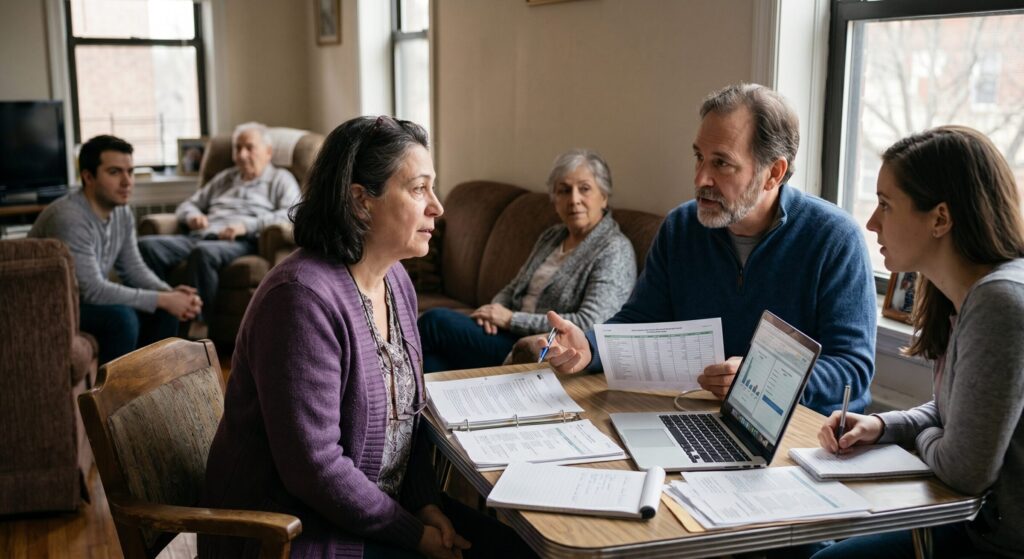
More than 40% of family caregivers are the sole caregiver for their loved one, according to SeniorLiving.org research. And nearly half of all caregivers receive no outside help at all — no counseling, no respite care, no support group, nothing.
That’s not a badge of honor. That’s a setup for crisis.
If you have siblings, other family members, or close family friends, now is the time for a real conversation about sharing the load. This might feel uncomfortable — especially if others have been conveniently absent. But a calm, honest conversation about specific tasks (grocery runs, medication pickups, spending a Saturday afternoon with Mom so you can rest) is far more effective than silently shouldering everything.
What to do: Make a list of the tasks you handle each week. Pick two or three that someone else could do. Then ask — specifically and directly. “Could you take Dad to his cardiology appointment on the 15th?” is much easier to answer than “I just need more help.”
Also worth exploring: local caregiver support groups (in-person or virtual), which provide community with people who genuinely understand what you’re going through. The Family Caregiver Alliance maintains a nationwide database of local resources at caregiver.org.
3. Prioritize Your Own Health Like It’s Non-Negotiable
Here’s a sobering statistic from the CDC: 53% of caregivers over age 65 have two or more chronic health conditions themselves. Caregivers are at higher risk for depression — with 25.6% reporting lifetime depression, compared to 18.6% of non-caregivers. And only 23% of caregivers describe their mental health as “good.”
When you’re focused on someone else’s needs 24/7, your own health becomes an afterthought. Skipped check-ups. Meals you barely remember eating. Sleep that never feels like enough. Over time, this erodes your capacity to care for anyone.
What to do:
- Keep your own medical appointments — put them in the calendar and treat them like they’re as important as your loved one’s
- Talk honestly with your doctor about the stress you’re under
- If you’re struggling emotionally, therapy or counseling isn’t a luxury — it’s a tool. Many therapists now offer telehealth options that work around a caregiver’s schedule
- Look into your company’s Employee Assistance Program (EAP) if you’re working — many offer free mental health sessions
4. Accept Help When It’s Offered — and Know Where to Find It
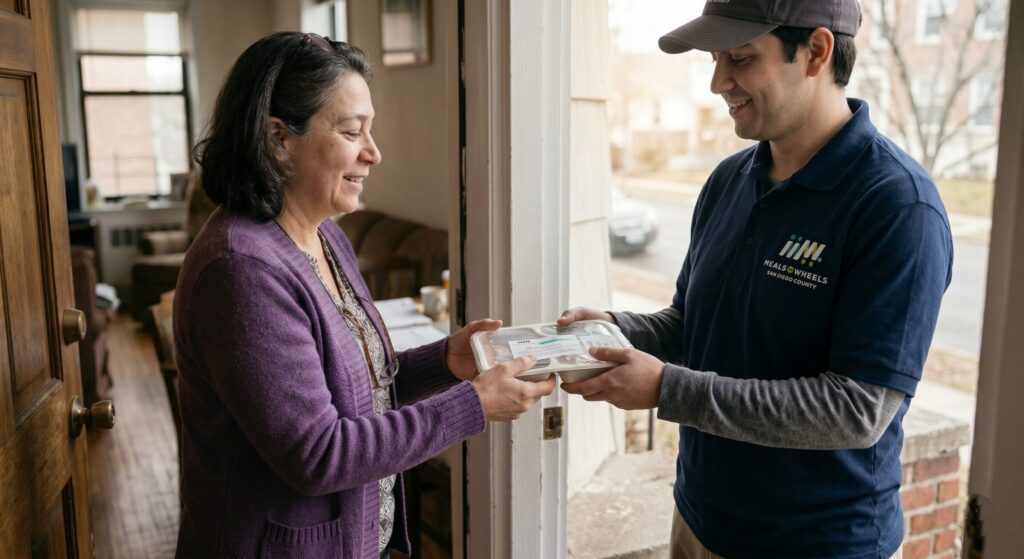
One of the most common things we hear from families who connect with Meals on Wheels San Diego County is some version of: “I wish I’d known about this sooner.”
There is real, meaningful support available for seniors in San Diego County — and it’s worth knowing what’s out there.
Meals on Wheels San Diego County serves homebound seniors across the region with:
- Nutritious, diet-appropriate meals delivered directly to the door — removing the stress of daily meal planning and preparation from caregivers’ plates (literally)
- Daily wellness checks — trained volunteers do more than drop off food. They observe changes in a senior’s physical and emotional condition and can flag concerns before they become emergencies. More than 75% of home-delivered meal recipients say these visits make them feel safer, according to a 2023 Administration for Community Living survey
- Social connection — for seniors who may go hours or days without meaningful human contact, that daily knock on the door matters more than most people realize. One in three seniors lives alone; one in four reports feelings of loneliness. Our volunteers help bridge that gap
For a family caregiver, knowing that a trusted person is checking in on your loved one every day — noting whether they seem confused, whether they’re eating, whether something seems off — can ease anxiety in a profound way.
→ To learn more or refer a loved one, visit meals-on-wheels.org or call us at (619) 260-6110.
Other community resources worth knowing:
- 211 San Diego (211sandiego.org) — a clearinghouse for local senior services, transportation, home care, and more
- San Diego County Aging & Independence Services (sandiegocounty.gov/hhsa/programs/ais) — services ranging from in-home support to caregiver relief programs
- Family Caregiver Alliance (caregiver.org) — national organization with state-by-state resource guides, fact sheets, and support group directories
5. Set Boundaries Without Guilt
This is a tough one to talk about, because caregiving is rooted in love — and love doesn’t naturally come with office hours.
But boundaries are not walls. They’re the structure that makes sustainable caregiving possible.
Boundaries look different for everyone. Maybe it’s deciding you won’t take calls after 9 p.m. unless it’s a true emergency. Maybe it’s being honest with your loved one that you can visit three times a week, not every day. Maybe it’s having a frank conversation with a sibling about what you can and can’t do going forward.
The important thing is that limits are communicated clearly, consistently, and without apology. You do not owe anyone an explanation for having needs of your own.
Over 55% of caregivers have been in their caregiving role for at least three years, according to SeniorLiving.org. This isn’t a sprint — it’s a marathon. And marathons require pacing.
What to do: Write down what’s non-negotiable for your own well-being (sleep, exercise, one evening off per week — whatever it is). Then ask yourself: what changes would I need to make to protect those things? Start there.
A Final Word
Caregiving is one of the most meaningful things a person can do. It’s also one of the hardest. The fact that you’re reading this — that you’re thinking about how to sustain yourself — says something important about who you are.
Protecting your own health isn’t a detour from caring for your loved one. It is caring for your loved one. Because they need you around, not just for this season — but for the long haul.
If Meals on Wheels San Diego County can help lighten the load, we’d love to hear from you.
📞 Call us: (619) 260-6110 🌐 Visit us: meals-on-wheels.org 📍 Serving seniors across San Diego County — South County, North County, East County, and Central San Diego
Meals on Wheels San Diego County provides nutritious meals, wellness checks, and community connection to homebound seniors throughout San Diego County. We believe that no senior should face hunger, isolation, or the fear of going unnoticed — and no family caregiver should face this journey alone.
SOURCES:
- National Alliance for Caregiving & AARP, Caregiving in the U.S. 2025 — capc.org
- A Place for Mom, 2026 Caregiver Burnout Statistics — aplaceformom.com
- SeniorLiving.org, Family Caregiver Annual Report — seniorliving.org
- Caregiver Action Network, Data & Insights on the Caregiver Experience — caregiveraction.org
- CDC, Changes in Health Indicators Among Caregivers, 2015–2022 — ncbi.nlm.nih.gov
- AARP, Demand Surges for Meals on Wheels — aarp.org
- Meals on Wheels America, Senior Health and Independence — mealsonwheelsamerica.org