
The Science is in: Pets Make Seniors Healthier, Happier, and Less Lonely
By Meals on Wheels San Diego County
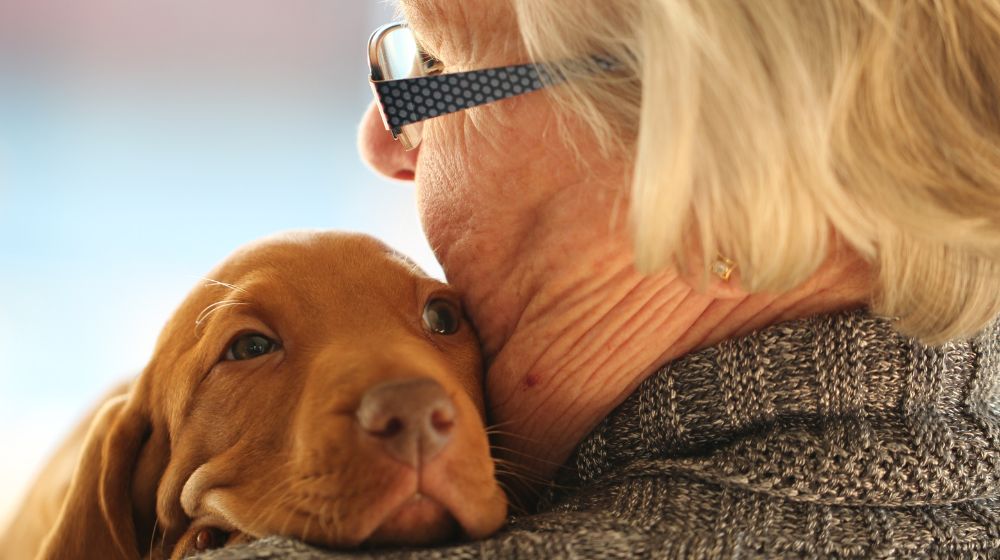
There’s a particular kind of quiet that settles into a home when someone is older and living alone.
No kids running through the hallway. No spouse in the next room. The social calendar that once filled up automatically — work, errands, family dinners — has thinned. And some days, the longest conversation a senior has might be with the dog at their feet or the cat on the windowsill.
That might sound sad. But here’s what the research is telling us: it’s actually something else entirely. It’s connection. It’s health. And in many cases, it’s the thing holding everything else together.
The bond between seniors and their pets is one of the most underestimated forces in healthy aging. And we think it deserves a real conversation.
The Numbers Are Hard to Ignore
Before we get into the “why,” let’s start with some of what the data shows — because it’s more striking than most people expect.
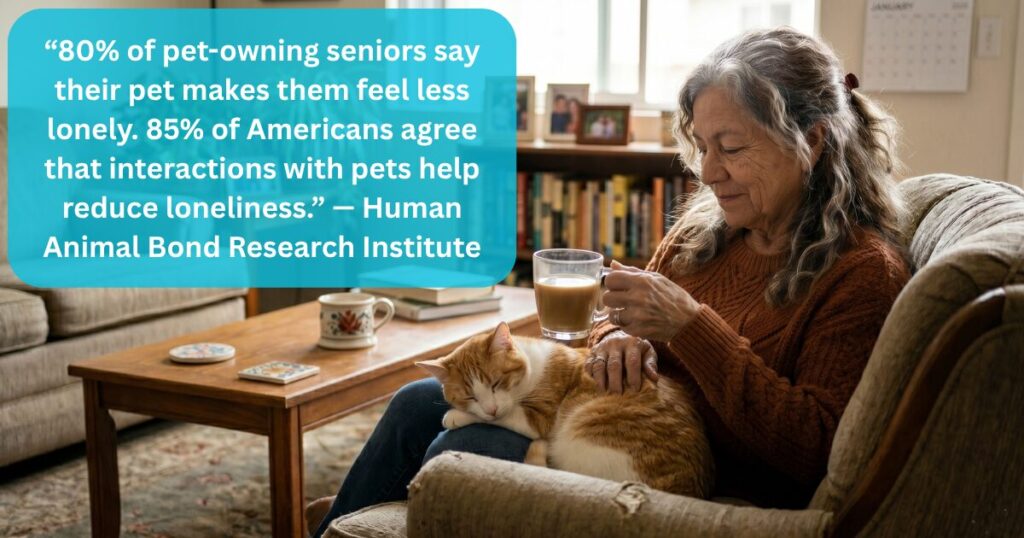
- Seniors with pets are 36% less likely to report feelings of loneliness than those without — a gap that has real consequences for health and longevity
- 74% of pet owners report improved mental health as a result of the companionship and emotional support their pets provide
- Dog owners walk an average of 22 minutes more per day than non-owners — a seemingly small difference that adds up to real cardiovascular benefit over time
- According to the CDC, pets are linked to better cognitive function, increased opportunities to socialize, and greater levels of physical activity in older adults
- The American Heart Association has noted that pet ownership — particularly dog ownership — may play a role in reducing cardiovascular disease risk
These aren’t soft, feel-good findings. This is peer-reviewed science pointing in a consistent direction: for older adults, the presence of an animal companion is genuinely good for the body and the mind.
What a Pet Actually Does For a Senior
Ask any older adult who has a dog or a cat what that animal means to them, and you’ll usually hear some version of the same answer: “They give me a reason to get up in the morning.”
That’s not just sentiment. That’s one of the most important things a person can have.
Here’s what’s actually happening, in real terms:
A Sense of Purpose and Routine
For seniors who have retired, lost a spouse, or whose world has gradually gotten quieter, the days can start to blur. A pet interrupts that. The feeding schedule. The morning walk. The fact that another living creature is counting on you — these things impose a rhythm on the day that turns out to matter enormously for mental health and wellbeing.
Interacting with pets has been shown to lower cortisol (the body’s primary stress hormone), reduce anxiety, and create a steady sense of calm that builds over time. It’s not complicated. It’s consistent, low-stakes companionship — and that turns out to be exactly what a lot of older adults need most.
The Loneliness Problem — and Why Pets Help
Loneliness among older Americans isn’t a minor concern. It’s a public health issue. According to AARP data, 42% of older men and 37% of older women report feeling lonely on a regular basis. And loneliness — true, chronic social isolation — has been linked to increased risk of heart disease, cognitive decline, weakened immune response, and even early death.
Pets don’t solve loneliness entirely. But they do something important: they provide constant, unconditional presence. A dog that follows you from room to room. A cat that settles onto your lap in the afternoon. The simple, wordless fact of not being alone.
For homebound seniors especially — people whose mobility or health may limit their ability to get out and be with others — this presence is not a small thing. It can be the difference between a manageable day and a very dark one.
Pets Keep Seniors Moving
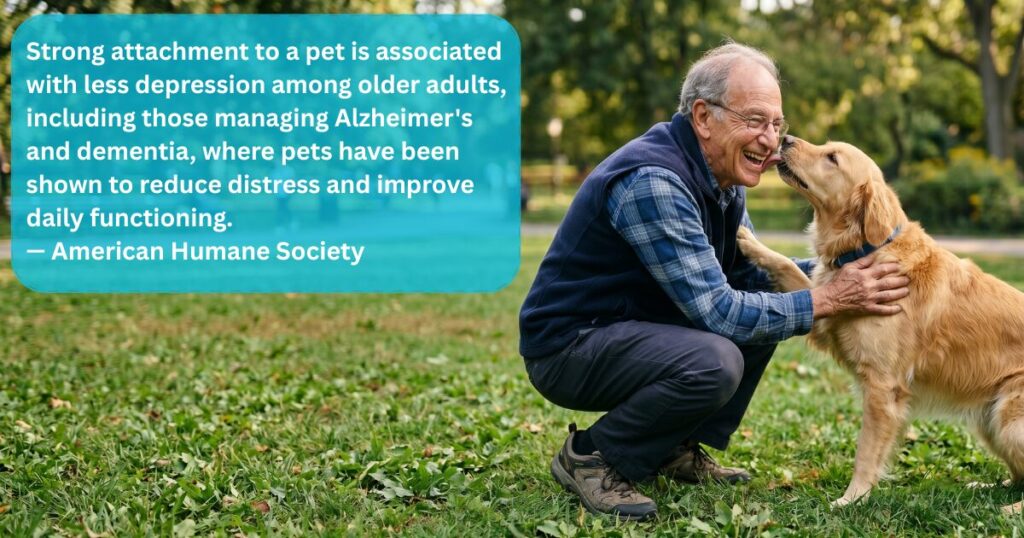
This one is sometimes underestimated. Dog ownership, in particular, is one of the most effective and sustainable ways to keep an older adult physically active. Dog owners walk more, move more, and are less likely to develop the mobility limitations that tend to compound over time.
Research suggests that seniors with pets experience fewer limitations in daily activities — a finding that holds up across multiple studies and points to the cumulative benefit of the low-intensity, consistent movement that pet ownership naturally encourages.
Even for seniors who have cats or smaller animals, the activity of caring for a pet — the bending, reaching, walking, and moving around the home — adds up in ways that sedentary alternatives simply don’t.
Social Connection That Goes Beyond the Home
Here’s one that surprises people: 54% of pet-owning seniors say their pet helps them connect with other people.
Dogs are remarkable social catalysts. A walk around the block with a dog generates conversations, eye contact, smiles, and spontaneous moments of human connection that might not otherwise happen. Even in a neighborhood full of strangers, a dog tends to lower everyone’s guard.
For seniors who may feel like their social world has shrunk, this matters. The pet isn’t just company at home — it’s a bridge to the community outside.
Different Pets, Different Gifts
Dogs and cats tend to get most of the attention in the research — and for good reason. But the bond between seniors and animals takes many forms, and the benefits don’t require a specific species.
Dogs offer the most active companionship: walks, play, physical affection, and a highly responsive emotional presence. They’re particularly effective at motivating movement and providing a sense of safety and routine.
Cats are often better suited to seniors with limited mobility or energy. They’re quieter, lower-maintenance, and yet remarkably attuned to their owners’ emotional states. There’s a reason the sound of a cat purring has its own category of research — it turns out it may actually have mild pain-relieving and anxiety-reducing effects.
Birds provide companionship and cognitive stimulation. Talking to a bird, caring for its environment, and the small rituals of ownership give structure to the day in ways that quietly support mental health.
Fish and smaller animals may seem less interactive, but the visual calming effect of a fish tank — and the responsibility of caring for any living thing — has measurable benefits for stress and mood.
The point isn’t that any one type of pet is best. The point is that the relationship matters, and it works in ways we’re still learning to measure fully.
What Happens When Seniors Can’t Afford to Care for Their Pets
Here’s the part of this story that tends to catch people off guard.
For many seniors — particularly those on fixed incomes — the cost of pet food, veterinary care, and supplies can become genuinely difficult to manage. And when that happens, something painful tends to follow: seniors start making impossible choices. Or they quietly go without necessities themselves to make sure their animals are fed.
It’s not irrational. When a pet has become someone’s primary source of daily companionship, the idea of that animal going hungry — or worse, having to give the animal up — can feel unbearable.
This is a real, documented pattern. And it’s one that Meals on Wheels San Diego County, in partnership with a remarkable local organization, has been working to address for decades.
AniMeals: How We’re Helping Seniors and Their Pets Stay Together
It started with a volunteer and a hunch.
Back in 1984, a Meals on Wheels volunteer in San Diego noticed something during her delivery route that she couldn’t look away from. One of her clients — a homebound senior living alone — was sharing her delivered meals with her cats. Not occasionally. Regularly. She was going without food herself so her animals wouldn’t have to.
The volunteer shared the story with Helen Woodward Animal Center in Rancho Santa Fe. And from that single observation, one of San Diego’s most quietly remarkable programs was born.
The AniMeals program began with just 10 clients. Today it provides food for more than 850 pets every month — dogs and cats, large and small, wet food and dry — owned by homebound seniors, veterans, and people with disabilities throughout San Diego County. The model has since been replicated in more than 60 cities worldwide.
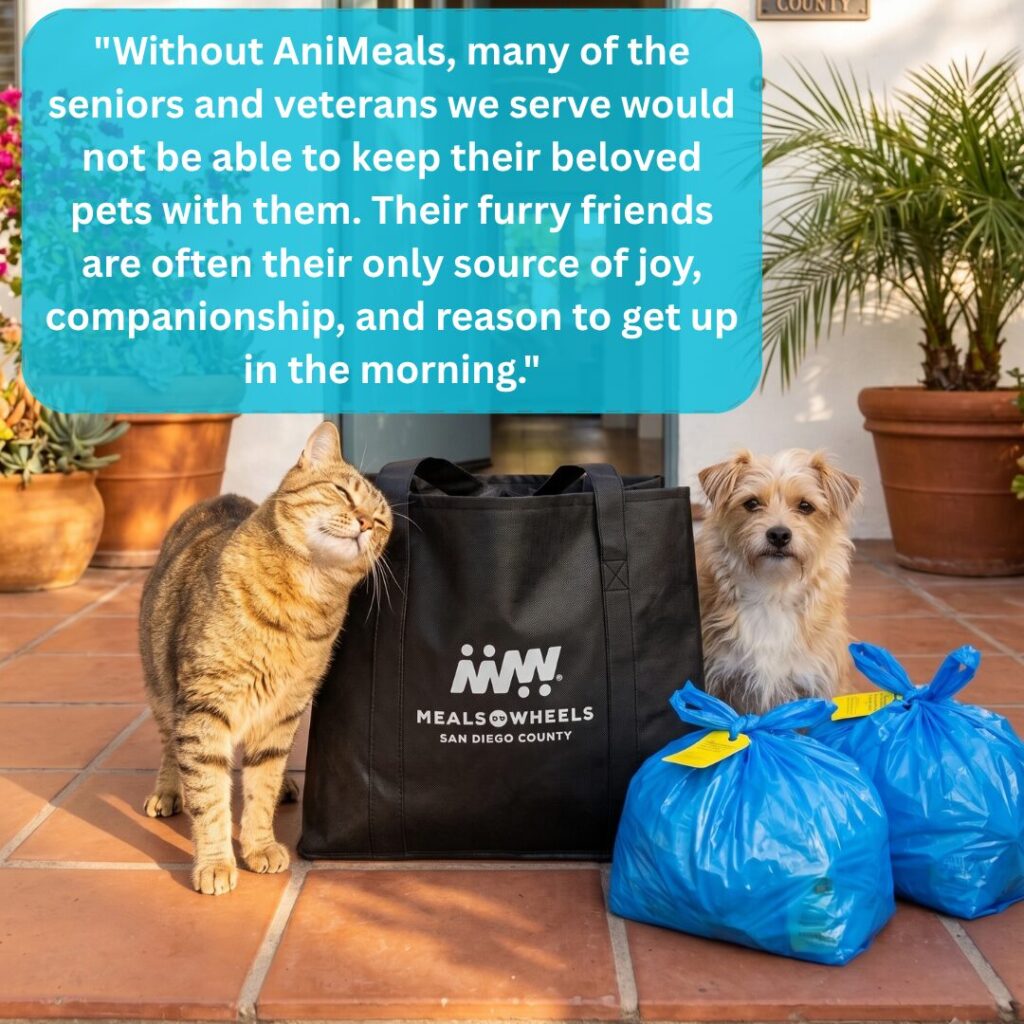
Here’s how it works: Meals on Wheels San Diego County delivers pet food — at no cost to the client — right alongside our regular meal deliveries. Any client who has a dog or cat can request it. We currently deliver pet food to 740 animals across the county, from Chula Vista to Escondido, in every corner of our 3,049-square-mile service area.
The goal is straightforward, and it’s about more than feeding animals. It’s about making sure our clients are eating their food. It’s about keeping seniors and their companions together. And it’s about recognizing that a senior’s bond with a pet isn’t a nice extra — it’s part of how they stay healthy, engaged, and connected to the world.
If you or a loved one receives Meals on Wheels services and has a dog or cat, ask us about AniMeals. It costs nothing, and it can make an enormous difference.
📞 Call us: (619) 260-6110 🌐 Learn more: Meals on Wheels San Diego County 🐾 Helen Woodward Animal Center: hwac.com
The Bottom Line
Pets don’t fix everything. They can’t replace human connection, medical care, or the broader support that older adults need to thrive.
But for millions of seniors — including many right here in San Diego County — the presence of a dog, a cat, or any animal companion is one of the most meaningful factors in their daily quality of life. It gives them purpose, movement, comfort, and a reason to be present in the moment.
Science is increasingly backing up what seniors (and their families) have always known instinctively: these relationships are real, they matter, and they’re worth protecting.
If you’re a family member supporting an older loved one, consider their pet part of the picture — not an afterthought. And if financial barriers are making it harder to keep that animal fed and cared for, know that help exists.
That’s what this community is for.
Meals on Wheels San Diego County provides nutritious meals, wellness checks, and community connection to homebound seniors throughout San Diego County — 7 days a week, including holidays, across all 3,049 square miles of the county. Through our partnership with Helen Woodward Animal Center, we’re proud to extend that care to the pets our clients love.
SOURCES:
- Human Animal Bond Research Institute — habri.org
- American Humane Society, Pets and Seniors — americanhumane.org
- CDC, Health Benefits of Pets — cdc.gov
- American Heart Association, Pet Ownership & Cardiovascular Risk
- Rosewood Nursing, Benefits of Pet Ownership for the Elderly — rosewood-nursing.com
- AARP, Demand Surges for Meals on Wheels — aarp.org
- Helen Woodward Animal Center, AniMeals Program — hwac.com
- Pets for the Elderly Foundation — petsfortheelderly.org