
The Hidden Health Crisis: Social Isolation Among Older Adults and What We Can Do About It
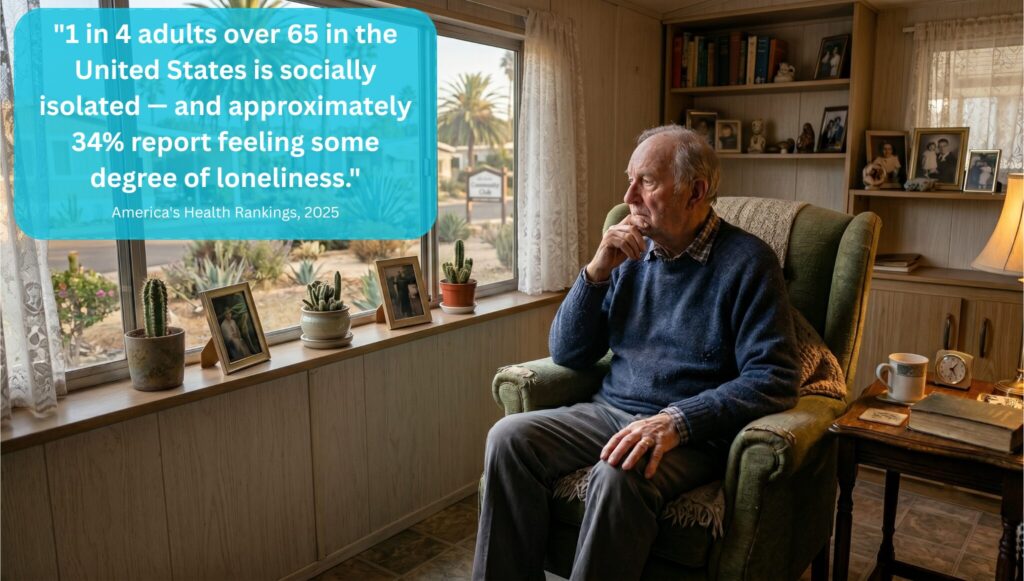
We tend to think of health risks in physical terms — heart disease, diabetes, falls. But one of the most serious threats facing older adults today is invisible, largely unmeasured, and happening quietly in living rooms across San Diego County and beyond. It’s social isolation — and its impact on health and longevity rivals that of smoking, obesity, and chronic disease.
This isn’t a soft issue. It’s a public health emergency. And for families, caregivers, and communities, understanding it is the first step toward addressing it.
Why Isolation Happens — and Why It Accelerates With Age
Social isolation doesn’t happen overnight. For most seniors, it’s a gradual process driven by a convergence of life changes that individually seem manageable but collectively create real disconnection.
Retirement removes a daily structure that provided both purpose and regular human contact. The loss of a spouse, siblings, or close friends leaves irreplaceable voids. Mobility limitations, chronic pain, hearing loss, and fear of falling make it harder to get out and engage. Two-thirds of older adults have age-related hearing loss — a condition associated with a 28% greater risk of social isolation over time. CAPC
Add to that the growing number of older adults living alone, and you have a population increasingly vulnerable to disconnection from the social fabric that sustains health and wellbeing.
The Health Consequences Are Severe — and Well Documented
This is not simply a quality-of-life concern. The research is unambiguous: social isolation is a serious medical risk.
According to researchers at Johns Hopkins School of Medicine, individuals who experience isolation face a 30% increased mortality risk — a figure that has been compared to smoking 15 cigarettes a day. CAPC
The cognitive consequences are equally alarming. A 2022 study tracking more than 5,000 elderly Americans over nine years found that those experiencing social isolation faced a nearly 30% greater risk of developing dementia. CAPC
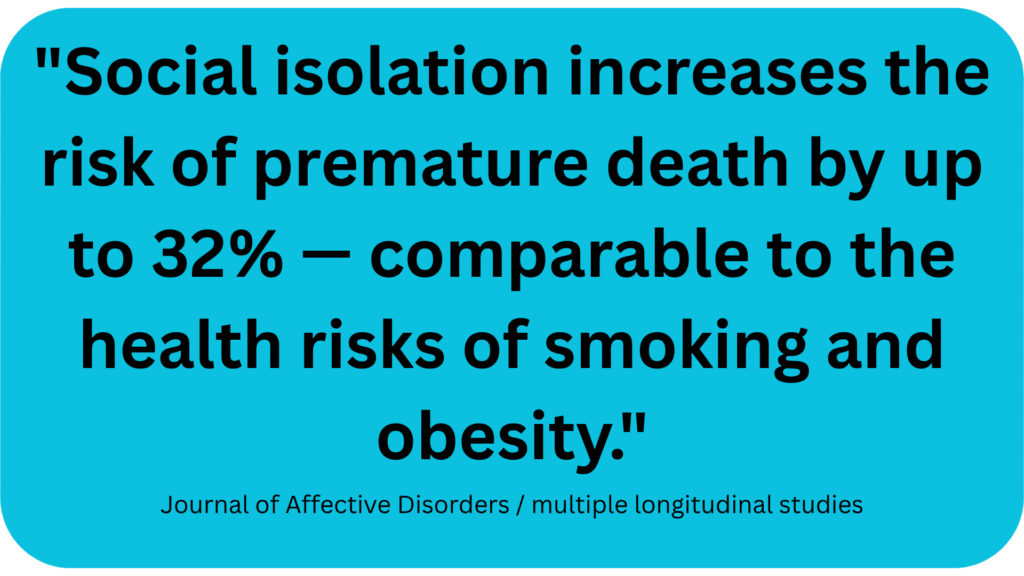
Beyond cognition, social isolation has been linked to depression, stroke, cardiovascular disease, and a 32% increased risk of premature death compared to non-isolated individuals. Johnahartford
As of 2024, 29% of older adults report feeling isolated some or all of the time — rates that have returned to pre-pandemic levels, but as researchers note, that baseline was never acceptable to begin with. PubMed Central
Who Is Most at Risk
While social isolation can affect any older adult, certain groups face significantly higher vulnerability:
→ Seniors living alone, particularly those who have lost a spouse
→ Older adults with mobility limitations, chronic illness, or cognitive decline → Those who have lost driving privileges and depend on others for transportation
→ Seniors with hearing or vision loss that makes communication difficult
→ Older adults without children or with geographically distant family members
→ Those experiencing financial hardship, which limits access to community activities
Understanding which risk factors apply to your loved one helps identify where targeted support is most needed.
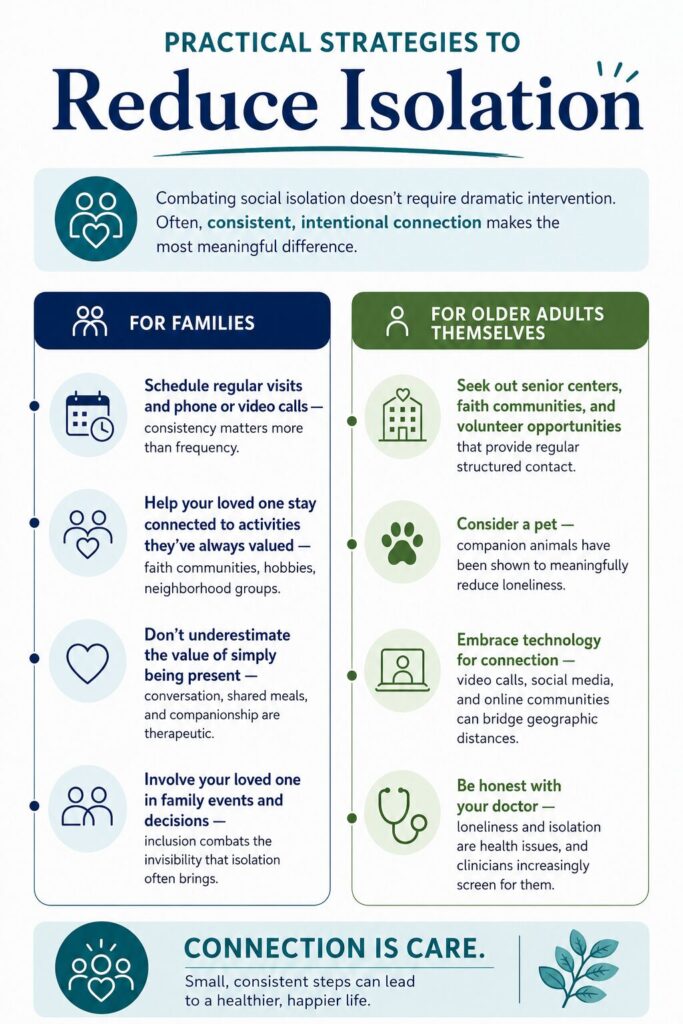
For healthcare providers and community organizations: Researchers recommend that clinicians screen patients for loneliness and isolation and connect them with community resources — senior centers, Veterans groups, volunteer opportunities, and services offered through Area Agencies on Aging. PubMed Central
The Role of Home-Delivered Meals in Combating Isolation
For homebound seniors — those who can’t easily leave their homes due to mobility, health, or transportation limitations — community programs play a critical and often underappreciated role in maintaining social connection.
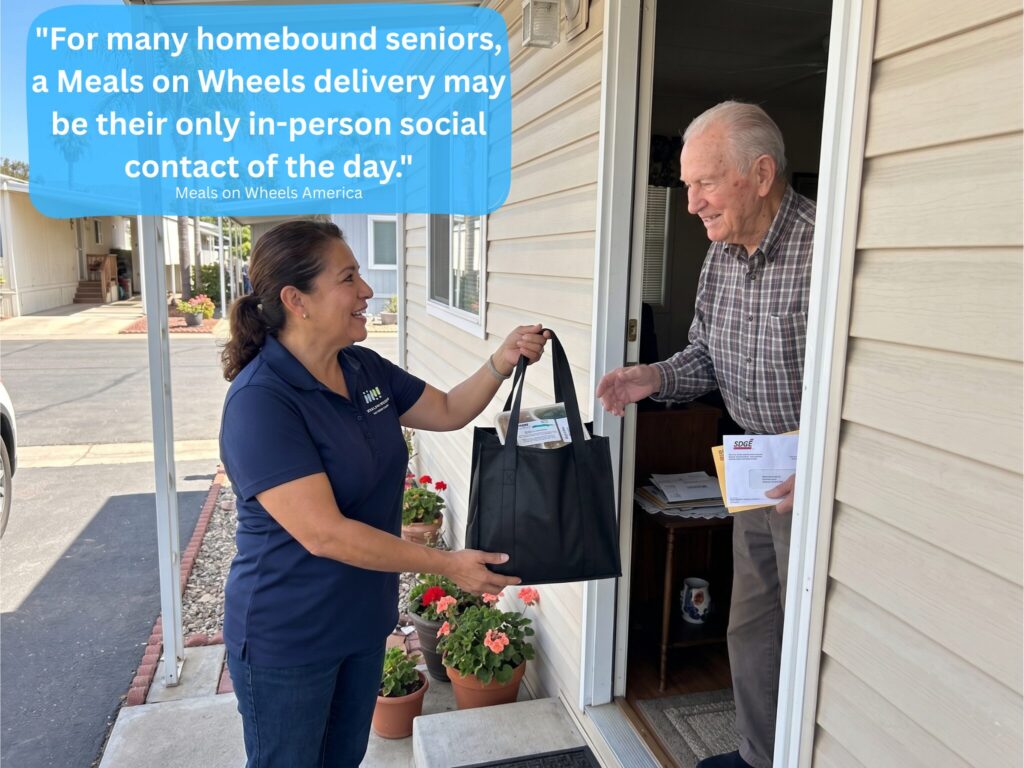
Home-delivered meal programs like Meals on Wheels San Diego County do something that goes far beyond nutrition. Every delivery is a human touchpoint — a volunteer arriving at the door, engaging in conversation, noticing if something seems different today. For a senior who may not otherwise see or speak to another person that day, that brief interaction is not incidental. It’s essential.
A 2025 study published in JAMA Network Open, conducted in partnership with Brown University and Johns Hopkins School of Nursing, found that home-delivered meals improved physical and emotional well-being, supported independence, and helped older adults remain in their homes. Springfield Recipients consistently cited the social connection that came with each delivery as among the most meaningful aspects of the program — not the meal itself, but the person who brought it.
For family caregivers who cannot be present every day, knowing that a trusted volunteer will arrive, make eye contact, and genuinely check in provides something money can’t easily buy: peace of mind.
Connection Is Not a Luxury — It’s a Health Necessity
Social connection is as fundamental to healthy aging as nutrition, physical activity, and medical care. The research is clear, and the human stakes are real. For families supporting an aging loved one, building connection into the care plan — not as an afterthought, but as a priority — can make a profound difference in both quality and length of life.
If your loved one is homebound, increasingly withdrawn, or showing signs of isolation, reach out for support. Community resources exist precisely for this moment.
Meals on Wheels San Diego County serves older adults across the county with home-delivered meals, regular wellness checks, and connection to community resources. To learn more or refer a loved one, visit our Get Meals page.