
Five Things Seniors Can Do Today to Feel Better Tomorrow
By Meals on Wheels San Diego County | Health & Wellness
Wellness advice for older adults tends to fall into one of two categories: so obvious it’s useless (“exercise more, eat less”), or so overwhelming it’s paralyzing (“overhaul your entire lifestyle starting immediately”).
Neither helps.
This is neither of those. This is five specific, science-backed, genuinely doable things that seniors can do today — not eventually, not after talking to seven specialists, but today — that have measurable positive effects on how they feel, function, and age.
None of them require a gym membership, a complicated meal plan, or a major life overhaul. All of them have real research behind them. And each one compounds over time, meaning the earlier you start, the more you get back.
Let’s go.
1. 🚰 Drink a Full Glass of Water Right Now
Before you do anything else on this list. Seriously.
Here’s something most people don’t know: the sensation of thirst diminishes with age. The physiological signal that tells younger people “you need water” gets quieter and less reliable after 60. Which means older adults are frequently mildly dehydrated without feeling thirsty — and mild dehydration has effects that are surprisingly significant.
“Dehydration in seniors can cause confusion, fatigue, increased fall risk, constipation, and even a heightened risk of kidney disease — and many older adults are chronically mildly dehydrated without realizing it.” — National Institutes of Health / Sunrise Senior Living
What dehydration actually feels like in older adults (and is often mistaken for other things):
- Fatigue or low energy
- Difficulty concentrating or mild confusion
- Headache
- Dizziness — including when standing up quickly
- Constipation
- Dry mouth and skin
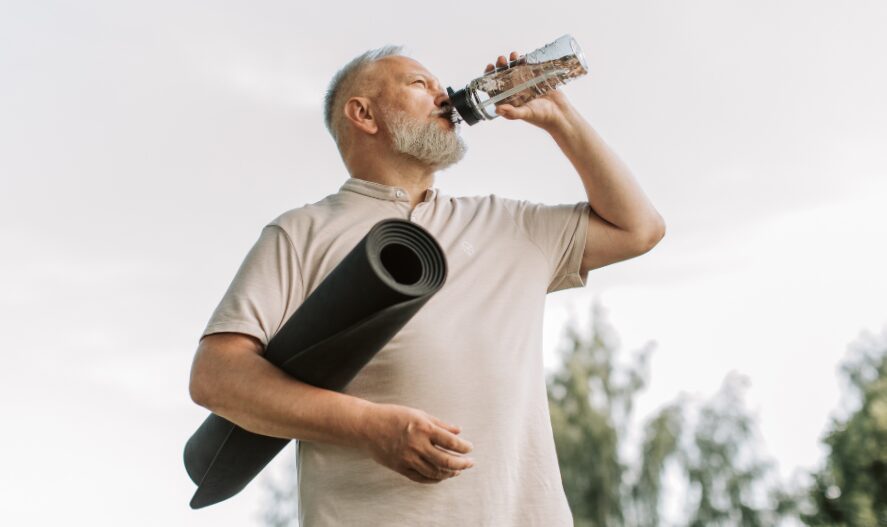
The goal is roughly 6–8 cups of fluids per day, and it doesn’t all have to be plain water. Herbal tea, broth, smoothies, and water-rich foods like watermelon, cucumber, and soup all count. But a glass of water in the morning — before coffee, before breakfast, right when you wake up — is one of the highest-leverage habits a senior can build.
Today’s action: Fill a large glass of water and drink it before you finish reading this article. Then put a water bottle somewhere visible for the rest of the day.
2. 🚶 Take a 10-Minute Walk
Not tomorrow. Not when it feels like a better day. Today.
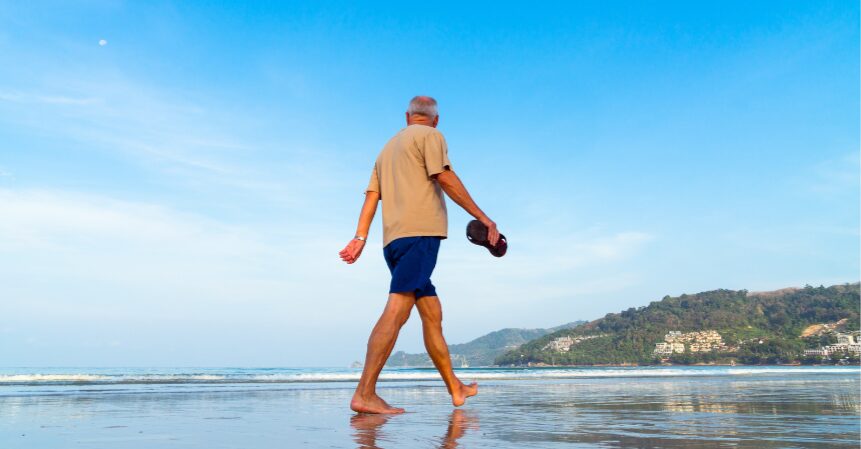
The evidence on walking for older adults is about as clear as health research gets. Even short, regular walks — 10 to 20 minutes — produce meaningful benefits for cardiovascular health, muscle strength, mood, cognitive function, and balance. And they reduce fall risk, which is one of the most serious health threats older adults face.
“The U.S. Department of Health and Human Services recommends 150 minutes per week of moderate-intensity activity for older adults — but research shows even 7,000 steps per day provides significant health benefits, and that benefits accumulate regardless of whether steps are taken all at once or in shorter increments throughout the day.” — Stanford Medicine / DHHS Physical Activity Guidelines
A Stanford geriatrician put it plainly: “Just a few days of inactivity can trigger long-term mobility challenges. On the flip side, a regular exercise routine helps people stay healthy and independent.”
That cuts both ways. The cost of not walking is real. So is the benefit of starting.
For seniors who find a longer walk daunting: break it up. A 10-minute walk in the morning and another after lunch adds up. You don’t have to do it all at once. You just have to do it.
Benefits you’ll feel relatively quickly:
- Better mood — walking triggers endorphin release, and even a short outdoor walk reduces anxiety and low mood
- Better balance — regular walking strengthens the small stabilizing muscles that prevent falls
- Better sleep — daily physical activity meaningfully improves sleep quality in older adults (more on sleep in a separate post)
- Cardiovascular support — walking gets the heart working at a beneficial moderate intensity
Bonus points if you walk with someone — a neighbor, a family member, even a dog. The social benefit stacks on top of the physical one.
Today’s action: Put on your shoes after you finish reading this and walk for at least 10 minutes. Around the block. Down the hall. Around the yard. Somewhere.
3. 📞 Call Someone You Care About
Not a text. A real call. Or better yet, a visit.
Loneliness among older Americans is a public health issue of remarkable scale, and the consequences go well beyond feeling sad.
“Chronic social isolation is associated with a 29% increased risk of heart disease, a 32% increased risk of stroke, and a 50% increased risk of developing dementia. Researchers have compared the health effects of loneliness to smoking 15 cigarettes per day.” — U.S. Surgeon General’s Advisory on Loneliness / Harvard Medical School
The good news: the medicine is free, and it doesn’t require a prescription.
Social connection — real, meaningful interaction with another person — has measurable positive effects on cardiovascular health, cognitive function, immune response, stress hormones, depression, and longevity. And unlike many health interventions, it feels good while it’s working.
For older adults whose social world has narrowed — through retirement, loss of a spouse, mobility limitations, or the simple fact that life changes — rebuilding connection often requires intentionality. Waiting for it to happen organically tends not to work.
Some ideas that work:
- A standing weekly call with a son, daughter, sibling, or old friend — scheduled, reliable, not conditional on having something to say
- Joining a group that meets regularly — a faith community, a senior center class, a walking club, a book group
- Volunteering — one of the most effective antidotes to loneliness (and covered in more depth in another post in this series)
- Video calls with family members who live far away — more connection than a text, more accessible than travel
Today’s action: Pick one person you haven’t spoken to in a while. Call them. Not a text — a call. Tell them you were thinking of them. That’s it.
4. 🍽️ Eat One Really Good Meal Today
Not a diet. Not a detox. Just one meal that earns its place.
This one is deliberately not about restriction. Seniors — especially those with smaller appetites, limited mobility, or fixed incomes — don’t need another list of things to stop eating. They need a reminder of what one genuinely nourishing meal can do.
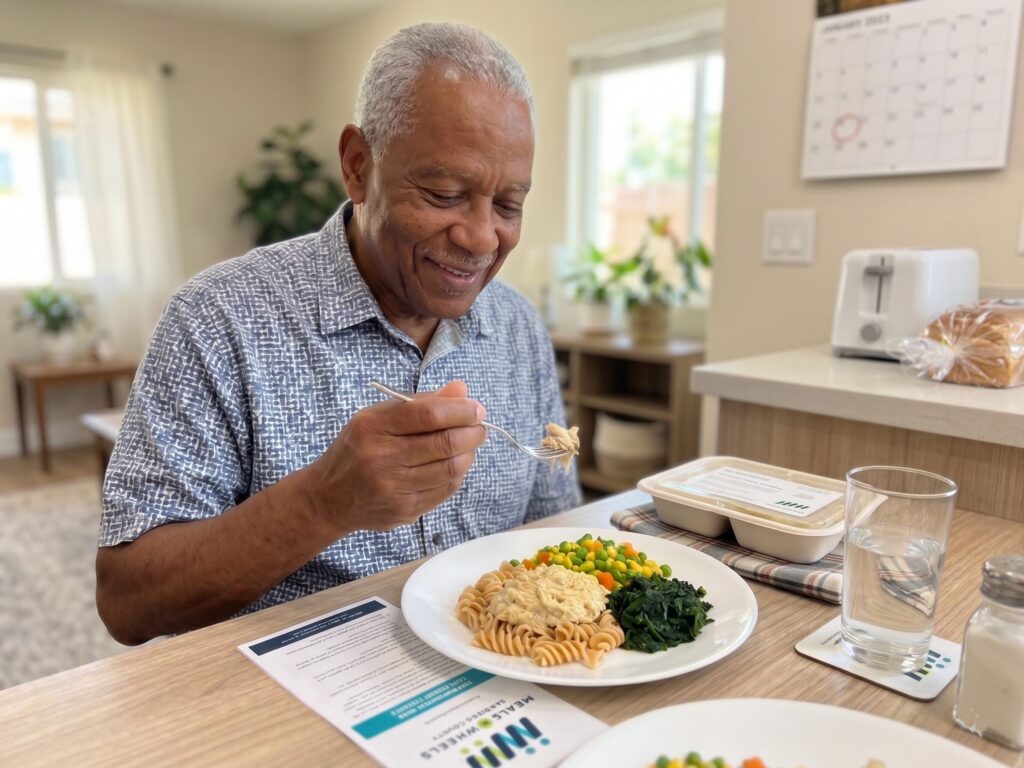
Here’s the frame: when appetite is lower and every bite carries more responsibility, nutritional quality matters more, not less. A small plate of scrambled eggs with spinach and avocado, a bowl of lentil soup with whole grain bread, a piece of grilled fish with roasted vegetables — these don’t have to be large or elaborate. They just have to count.
“About half of women and a third of men over age 71 don’t get enough protein — and caloric needs decrease with age while nutrient needs stay constant or increase. This means what seniors eat matters more than how much.” — USDA Dietary Guidelines for Americans 2020–2025
One solid meal a day — built around protein, healthy fat, fiber, and color — is a meaningful act of self-care. It supports muscle maintenance, immune function, cognitive clarity, energy, and mood.
What a good senior meal actually looks like:
- A palm-sized portion of protein (eggs, fish, chicken, Greek yogurt, beans, cottage cheese)
- A fist of colorful vegetables or fruit
- A small portion of healthy fat (avocado, olive oil, a handful of nuts)
- Water or another hydrating drink alongside it
That’s it. No calorie counting. No meal prep marathon. Just one intentional, nourishing meal per day — and if possible, two or three.
For seniors who find daily meal planning or cooking difficult — whether due to mobility, fatigue, limited transportation, or simple motivation — Meals on Wheels San Diego County delivers freshly prepared, dietitian-designed meals directly to the door. Seven days a week, including holidays, throughout all of San Diego County.
It’s not a last resort. It’s a practical tool that removes one of the most cognitively and physically taxing daily tasks from the plate — literally — so seniors can focus their energy on everything else.
→ Learn more at Meals on Wheels San Diego County or call (619) 260-6110.
Today’s action: Plan what you’re going to eat for your next meal right now. Make it count. If cooking feels like too much today, have a Greek yogurt with some fruit and a hard-boiled egg. Simple, protein-forward, and genuinely nourishing.
5. 💊 Review Your Medications (Or Put It on the Calendar)
This one might save your life. No exaggeration.
The average American over age 65 takes multiple prescription medications. Many take five or more. And polypharmacy — the medical term for the complications that arise from multiple drug interactions — is one of the leading causes of hospitalizations among older adults.
Here’s what makes this one tricky: medication side effects that affect fall risk, cognitive clarity, and general wellbeing often develop gradually and get attributed to “just getting older.” Dizziness, brain fog, excessive drowsiness, balance problems — these can all be medication effects that look like aging.
“50% of prescriptions in the U.S. are taken incorrectly — regarding timing, dosage, frequency, or duration. Medication non-adherence and interaction effects are among the leading causes of hospitalizations in older adults.” — Episcopal Retirement / NCOA
What a medication review actually involves: A conversation with a doctor or pharmacist — ideally once a year, or after any significant change in health status — where the complete medication list (including over-the-counter drugs, supplements, and vitamins) is reviewed for:
- Potential interactions between drugs
- Medications that may be increasing fall risk
- Duplicate therapies (two drugs doing the same job)
- Drugs that were prescribed for a condition that has since resolved
- Dosing that may need adjustment based on age-related changes in how the body processes drugs
Today’s action: If you can’t do a full review today, put it on the calendar for your next doctor’s appointment. Write down every medication, supplement, and vitamin you take — name, dose, and when you take it — so you’re ready for that conversation. And if something about your current medications is making you feel worse, not better, bring it up with your doctor. That’s not complaining. That’s advocating for yourself.
Putting It Together: The Five-Thing Day
Here’s what a day that includes all five of these might actually look like:
🌅 Morning: Wake up, drink a full glass of water. Take at least a 10-minute walk around the neighborhood.
☀️ Mid-morning: Make or receive a genuinely nourishing breakfast — eggs, yogurt, fruit, and a receive a home-delivered meal for later in the day.
🌞 Afternoon: Call or video chat with someone you care about.
🌆 Evening: Review your medication schedule and make sure everything is where it should be. Enjoy a well balanced meal.
That’s it. None of this takes more than an hour spread across the whole day. None of it requires equipment, a gym, or a prescription. And all of it, done consistently, makes a real difference — not in weeks or months, but across years.
Aging well isn’t about one dramatic transformation. It’s about small, consistent habits that compound over time into a life that stays fuller, more independent, and more yours.
Start today. Literally.
Meals on Wheels San Diego County delivers nutritious, dietitian-designed meals and daily wellness checks to homebound seniors and veterans throughout all of San Diego County — 7 days a week, including holidays. To learn more or refer a loved one, visit Meals on Wheels San Diego County or call (619) 260-6110.
SOURCES:
- U.S. Department of Health and Human Services Physical Activity Guidelines for Americans — health.gov
- Stanford Medicine, Healthy Habits for Aging in Your 60s and 70s — med.stanford.edu
- USDA Dietary Guidelines for Americans 2020–2025 — dietaryguidelines.gov
- National Institute on Aging, Healthy Aging Tips — nia.nih.gov
- NIDDK Health Tips for Older Adults — niddk.nih.gov
- National Council on Aging, Sleep Statistics for Older Adults — ncoa.org
- Sunrise Senior Living, Health Tips for Seniors — sunriseseniorliving.com